


Kamakura and the Seaside
- Aug 22, 2023
- 4 min read
Updated: Sep 11, 2023
From the itinerary on 18 August: After breakfast, start your day trip to the beautifully seaside city of Kamakura, the ancient capital of Japan, a small city but with an important place in Japanese history. In Kamakura, you will find a variety of impressive monuments, such as the 13-meter-high entirely made of bronze Buddha statue or the historic Hachimangu Shrine, which is the largest and most significant Shinto site in the prefecture. The nearby island of Enoshima, connected to the mainland by a bridge, gives you the opportunity to have lunch in some small restaurants but with magnificent views. In the evening, return to Tokyo.

Kamakura (鎌倉) is a coastal town in Kanagawa Prefecture, less than an hour south of Tokyo. The town became Japan's political center, when Minamoto Yoritomo chose it as the seat for his new military government in the late 12th century. The Kamakura government continued to rule Japan for over a century, first under the Minamoto shogun and then under the Hojo regents.
After the decline of the Kamakura government in the 14th century and the establishment of its successor, the Muromachi government in Kyoto, Kamakura remained the political center of eastern Japan for some time before losing its position to other cities.
Today, Kamakura is a small city and a very popular tourist destination. Sometimes called the Kyoto of eastern Japan, Kamakura offers numerous temples, shrines and other historical monuments. In addition, Kamakura's sand beaches attract large crowds during the summer.
Before breakfast today I took in the NEZU temple, hoping it would be cooler and not as humid. Actually it was not- in 10 minutes I was drenched in sweat. The only good thing was the temple was rather empty and I got some great shots:
And some cute turtles
It is known for its azalea festival in April which must be amazing. no flowers now unfortunately.
The route there took me through another area of Ueno park with beautiful flowers, and more turtles
And some interesting shop fronts
Breakfast was in a Japanese style room, so shoes off and sitting in the floor
Thank goodness I left early for the train station. They warned me the Tokyo station was a challenge and it was really a rabbit warren- at the last minute I asked an attendant and I was on the wrong platform so raced over and got on the train just in time. Here is the pandemonium in the station...it was crazier than in this video....honest.
The stewardess didn't believe I had a first class ticket and eyed it suspiciously, which I could understand once I looked in a mirror

The rides was uneventful and took about an hour

Bunny enjoying the ride
It took about an hour to get to Kamakura on the train which was pretty empty in first. No refreshments were offered. Beautiful sunny weather, but HOT
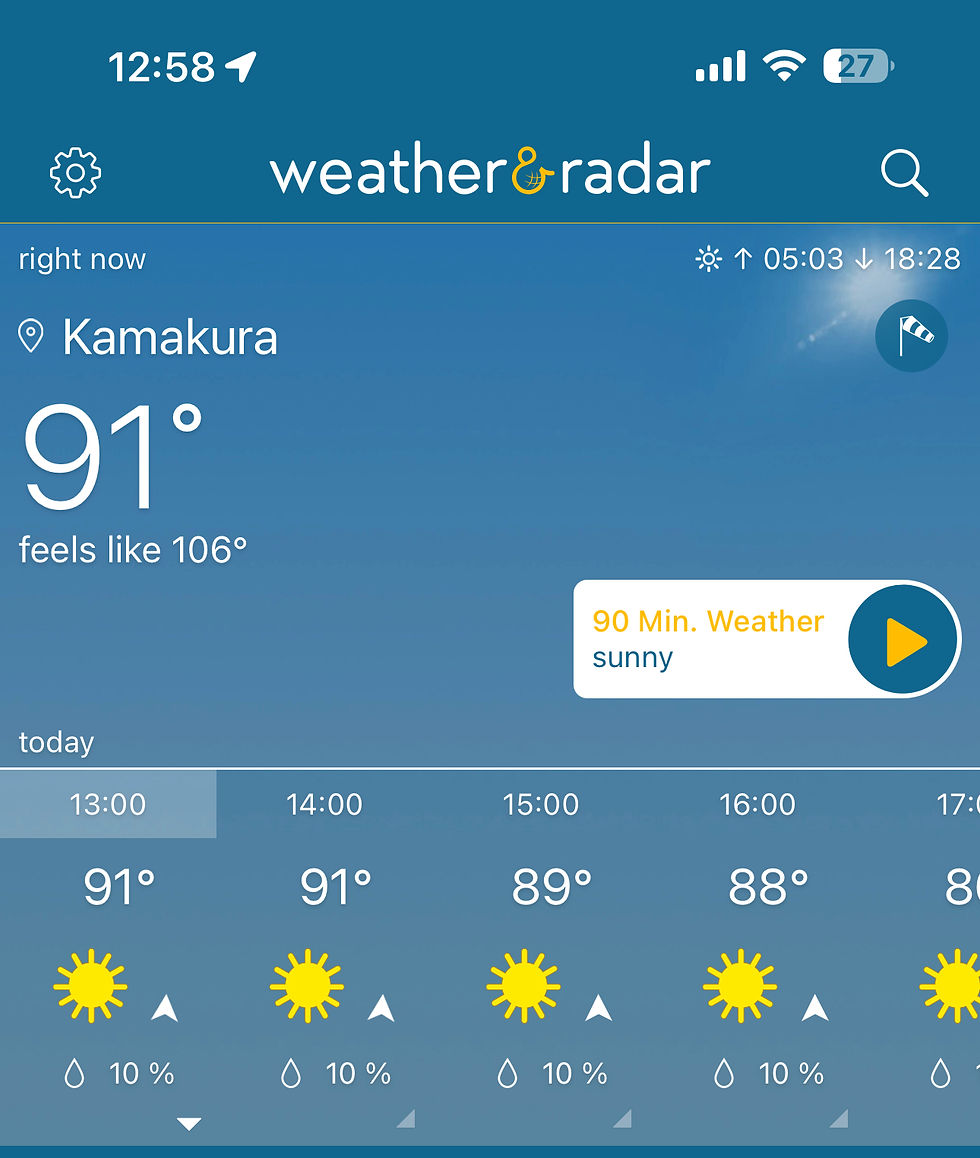
It was hard to decide where to start, so decided on the shrine and took the bus because of the heat and because the bus was there.
Here is some information about the shrine from Google:
Tsurugaoka Hachimangu (鶴岡八幡宮, Tsurugaoka Hachimangū) is Kamakura's most important shrine. It was founded by Minamoto Yoriyoshi in 1063, and enlarged and moved to its current site in 1180 by Minamoto Yoritomo, the founder and first shogun of the Kamakura government.
The shrine is dedicated to Hachiman, the patron god of the Minamoto family and of the samurai in general. The deified spirits of the ancient EmperorOjin who has been identified with Hachiman, Hime-gami and Empress Jingu are enshrined at Tsurugaoka Hachimangu Shrine.
Sadly I missed my stop and did the shrine backwards which turned out to be ok. My first stop was the towns museum which had some artifacts that were over 1000 years old, including these statues with amazing eyes.
and pictures of the town right after a big earthquake from 100 years ago.
The shrine itself is made a number of buildings and because I started backwards I now walked up the stairs to the main shrine building which was quite grand. Once inside I made a donation and wrote some wishes- one was for success on my climb up Mt Fuji.
To the other side was a small museum which wasn't worth the 200 yen (~$2), as everything was a replica.
Descending to the main area of the shrine I visited another museum that had some beautiful swords on display- originals- donated a thousand years ago to the shrine. Along the way there were some beautiful lilies just blooming
I walked back to the train station along the main street for window shopping as there were many charming shops. Also I walked by a rickshaw parking lot
In general the town has more of a traditional vibe with 2-3 story buildings with shops on the first floor. The architecture is similar to mid-20 century.
I had a decision to make- The Buddha or sea-side town of Enoshima. I chose Enoshima. This was a 50 minute bus ride through the hills of rural Japan and down to the sea.

It could have been a seaside town almost anywhere in the world. Lots of ice cream and restaurants and people on a swimming holiday. The sands were rather darker than other places I've been- probably do to the volcanic-based sand.
I started looking for the small restaurants with magnificent views, but they were not immediately apparent. Doing some quick internet searching I found a place with great reviews, but the route took me up the Tsunami evacuation path which, while interesting, was quite steep in the heat and humidity. Good practice for Fuji....
Unfortunately, the restaurant was very popular and I didn't have time to wait or I would have missed my return train, so I walked back and took some shots of the view and some kites flying the thermals.
While waiting for the bus there was some sort of emergency requiring an ambulance.

Here are some shots of the coast.
I saw the Colonel on the way to the train station

and I made the train back to the hotel with bunny.


Comments