


Going to Koyasan
- Sep 15, 2023
- 4 min read
Saturday August 26, 2023, from the itinerary:
Today you will travel to Koyasan, the center of Shingon Buddhism in Japan. Walk along the pilgrimage paths, passing smaller temples and shrines. Some of the most important Buddhist temples are located here, such as Kongobuji Temple and the Garan Central Temple Complex. You can find more information on the area and what to explore here.
You will spend the night in one of the temples there. Here you can participate in meditations and morning prayers, just like the monks living there, and taste typical vegetarian monk food. I spent the night at the Koyasan Sojiin Monastery.
Today was the transition from my Onsen experience to the spiritual portion of my journey and for the preparation for Kumano Kodo . My trip is half over today! This is turning into an eat pray love experience….


Breakfast was a buffet, so nothing exotic, but they were defrosting a big octopus leg....


I left a bit early so there was sufficient time for ticket purchase- thank goodness for google translate. It was a pretty awful station and nowhere for a coffee. Plus the car marks on the station platform were totally wrong. I almost missed getting on because I was on the wrong end of the platform. I saw a pomegranate tree along the way.

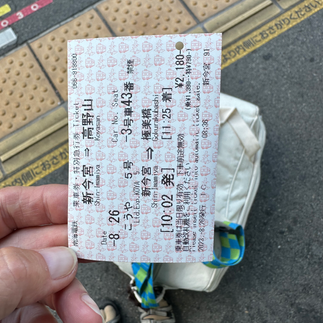


The train to koyasan was a smaller local one.


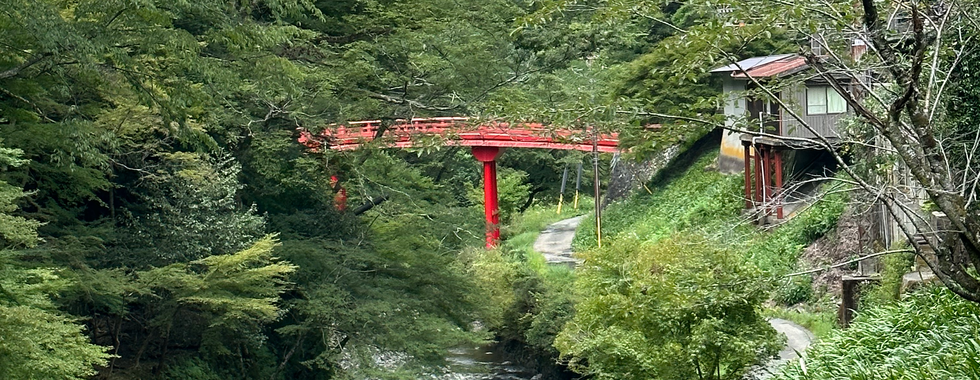
My seat was taken by a family and the stewardess was nice enough to let me sit on my own. As we passed the town of Kongo, I noticed a big spire, but I can't find out what it was. The journey goes back up into the mountains from the coast. There are beautiful lush valleys with traditional houses.





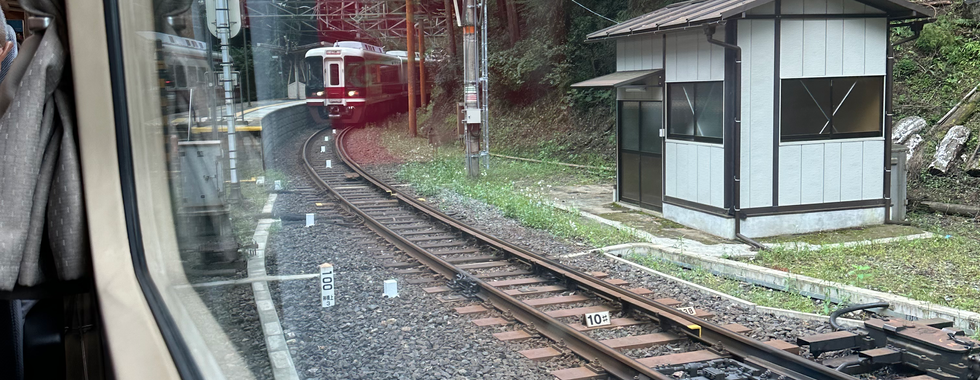



I transferred from the train to a cable car. According to the cable car loud speaker, "Koyasan is an unforgettable destination for over 1200 years.center of Buddhism in Japan. 816 brought Shingon Esoteric Bhuddism here which was supported until the Meiji government supported a shift back to Shintoism."


From the cable car, I was to take a bus into Koyasan. Along the way I met a couple - he French, she Irish. She addressed me in French which I got to practice before we realized English was a better bet. They work in Japan and were discussing how it was nice that tourism had returned so she could dress informally and not be starred at:).
The Koyasan Sojiin Monastery is a Shukubu - A ‘shukubo’ is basically a ‘ryokan’, a traditional guesthouse providing lodging to visitors to nearby or within temple and shrine complexes at which guests can glimpse the daily practices of the monastic life. Shukubo typically offer guests traditional rooms with ‘tatami’ matting, low furniture and on-floor ‘futon’ and serve vegetarian menus of ‘shojin ryori’ (monk’s cuisine ). Originally intended to provide accommodation to pilgrims and other Buddhist practitioners, most shukubo are open to guests of any faith or background, regardless of whether than are there on pilgrimage or visiting for other reasons.
I arrived at about noon. In most towns there are noontime chimes played over the loudspeaker
I walked from the bus stop to the monastery and it is a very picturesque town.


I finally found the temple where I was set to stay the night with the monks. I got lost because there was no sign, given the construction across the front entrance. A nice lady helped me find it and the monk took my luggage (was only noon and check in was at 3).
I spent the afternoon wandering Koyasan. Established in 819 by Kukai – the founder of Shingon Buddhism in Japan, posthumously named ‘Kobo Daishi’ – Koyasan and its main temple of Kongobu-ji remain the headquarters of the Shingon sect to this day. As one of Japan’s main Buddhist sects, Shingon has more than 3700 affiliated temples and its teachings are interwoven within the cultural fabric of the overall country. Kongobu-ji is the principal temple within the sect – afforded World Heritage Status as part of the ‘Sacred Sites & Pilgrimage Routes in the Kii Mountain Range’ – and focal point of the overall mountain complex; a compact and compelling religious site that also includes other major temples, numerous subtemples, a university dedicated to religious studies and the mausoleums of Kukai and Japan’s third shogun Tokugawa Iemitsu.
I started at Kongobu-ji head temple and had a quick look- saw some monks...


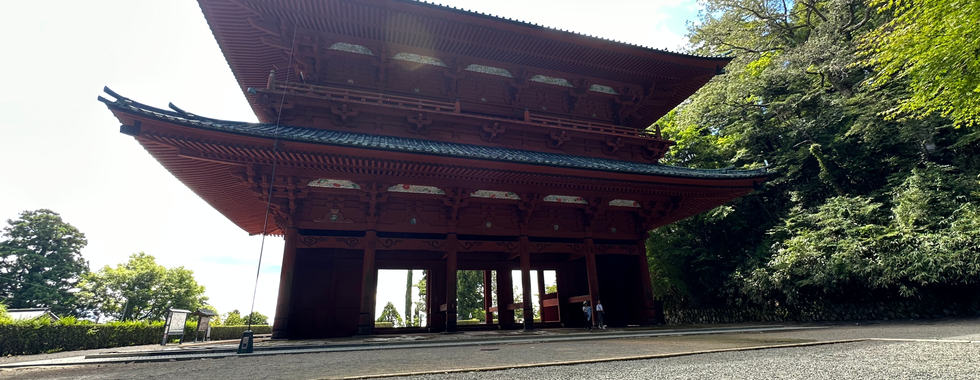
Then over to the Daimon, a.k.a. the Grand Gate




I returned back into town and visited the large Danio Garan Temple complex. It is another of Koyasan’s most renowned temples – one the temples built during the lifetime of Kukai. Although Kukai did not live to see its completion, he instructed followers within the temple grounds giving it huge importance to follower of Shingon Buddhism and the Japanese in general. The temple consists of around 20 buildings of which the Kondo (main hall) and large Konpon Daito Pagoda are its most notable structures. Standing 45 metres in height, the two-tiered vermillion pagoda houses a statue of the ‘Dainichi Nyorai’ (Cosmic Buddha) and is perhaps Koyasan’s most recognisable structure while certainly another temple you must visit while there.




I know this looks like the same video, but I was just fascinated by watching the worshippers pushing the prayer wheel.
Halfway through I went to the REIHOKAN MUSEUM which had artifacts back to the 8 and 900s. Unfortunately no photos were allowed- suffice to say they were similar to those in the Kamakura with the bizarre statuary and eyes that stared at you
Walked back to Goran and finished walking through that complex - all the photos are in the montage above.
It was checkin time, so went over to the temple


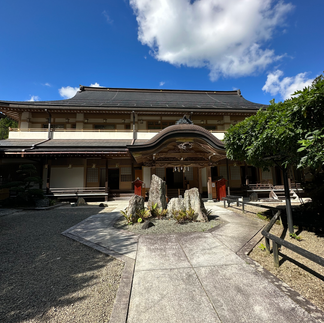
and was asked to wait in a beautifully furnished entry area and given tea and cakes.


My rooms were substantial, though a bit more humble than other accommodation on this trip and had a few ant friends.
I received some instructions about the yakuta and here is a photo of my bed for the night


I had a bath in my private Onsen and here is a picture of the public Onsen .
Before dinner a big thunderstorm started
Dinner was a monk vegetarian feast while listening to the 6pm gong. It was served by monks. I wonder what the Kanji characters spell....


Lights go out at 9 but I was already asleep by then.


Comments