


On to Takayama
- Dec 13, 2025
- 4 min read
November 12, 2025 from the itinerary: Travel a full day by car to Takayama.


During the drive stop at several traditional villages including Gokayama and Shirakawago. Stay in Hidatei Hanaougi Ryokan.
Weather - cool and sunny
Breakfast included a fried egg which I wasn’’t sure how to eat using chopsticks and didn’t want anyway. I had the rice, sashimi and miso soup which were very tasty.
Both Gokayama

and Shirakawago

are very remote mountain villages and world heritage sites. They are known for their Gassho style roofs which are sharply pitched thatched roofing. Sharply pitched because it snows so much. The thatching is basically the same as in the UK and needs to be replaced about every 30 years. The roofs are detached from the base of the house which is supposed to have some advantage during an earthquake, not sure what the advantage is. They do not use nails, only cedar logs, thatch and rope made from grasses. The roofs themselves are said to reflect the same shape as hands during prayer.

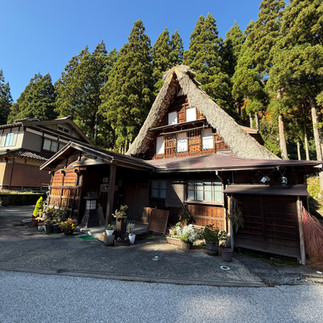
The houses are two story, the first floor is the living space and the second floor was used for silk moth production.




Fire is the biggest concern and they have fire drills once a year. The photos reminded me of the fire boats on the Hudson River - the fire hydrants shoot water on the roofs.


The area has had electricity since the 1930s.


The two villages were very similar in nature, but Gokayama is smaller and less crowded. Besides the houses, Gokayama had a museum that showed old telephones, lamps (used before electricity), an old telephones switchboard, and similar memorabilia. We were allowed up to the second floor which meant going up a very steep ladder. The upstairs is where the silk worms were curated and you could also get a good look at the roof.
Here are some photos of Gokayama.
Besides the houses, the highlights were:
a “20 day stone” - once this stone was visible in the snow, the snow would last only 20 days more.


And Tengos Footprint -a hole in a stone purportedly made by a goblin.


The area was beautiful because the leaves were still in full Fall colors. There were large groves of cedar which was used to make houses until end of WW2 when they started to use imported wood. As a result they have groves of cedars of the same height because they were planted, but never harvested.
An interesting factoid about what they would do with human refuse, both urine and excretion - were stored under floorboards and then sent to Tokyo to be used in gun powder. No photos taken....
Both areas have a bear problem due to a hot summer and not enough food. There have been several bear attacks in many of the places I’ve visited on this trip. Just this week a man was attacked in Shirakawago and this attack happened where there were many tourists.


It was about 40 minutes to Shirakawago and we passed the village of Suganuma which also had about 9 houses in the same style. We didn’t stop, but continued to Shirakawago.
Shirakawago was a bigger village and had many more tourists, but far fewer than I expected, At least the village was larger, so they seemed about the same density as Gokayama.
Due to the influx of tourists, extra parking lots were added across the Shokawa River and a suspension bridge is used to cross over from the parking to the village itself. The river is dammed, so its flow is controlled.


From the bridge I went for an ice cream - not sure why - but it was very nice local soft serve ice cream in a “granola” cone which looked like a sugar/waffle cone to me.


Then I decided to work this off by walking up to the observation area. To get there I had to pass many “Beware of Bears” signs (see above). I didn’t see any bears.


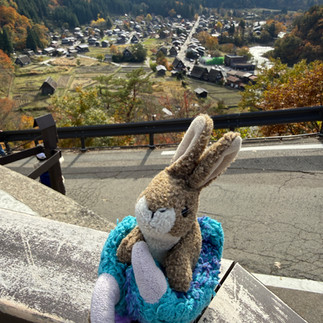
I came down from observing the village and went to the Wada House. Wada was the local mayor’s family and their large house was open to visitors. It was probably twice the size of the museum in Gokayama, but much along the same lines


I decided to stop for lunch, even though I wasn’t really hungry. And ended up eating at a geisha house. I had soba with radish which was quite good.


It took us about 90 minutes to get to Takayama due to road closures. The road was scenic due to the beautiful leaves and we saw a family of monkeys crossing the road on the way. Evidently monkeys aren’t often seen, so this was a bit of a bonus.
There were a lot of tunnels throughout the day which went through the mountains. Some were quite long.
Other than having my name wrong


and the wrong type of bed, the hotel was much nicer than the last few nights. The hotel is bigger than I thought, but it has a lot of amenities, like a foot bath near the lobby and I have my own private onsen.
I haven’t tried the foot bath yet, but it’s on the list for tomorrow. The room also has its own massage chair which I tried after my bath. Oh, and the floors are heated too!


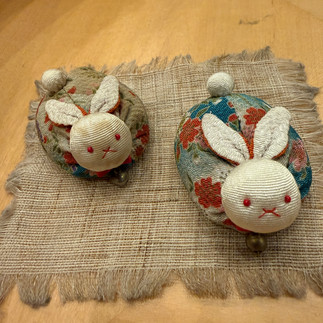
I had a welcome drink of Matcha and a traditional sweet which was served at check-in. My table had bunnies on it!



Dinner was lovely and included lots of tasty tidbits. The highlight was the steak which was very much appreciated after so many days of fish!
My room has beds, but I did ask for a futon option. The jury is still out as to which one I will use tonight:)


Comments